
INTERNATIONAL WOMEN’S DAY 2026: BELONGING, LEADERSHIP AND WHAT WE GAIN
By Ella Jerman, Social Media Director
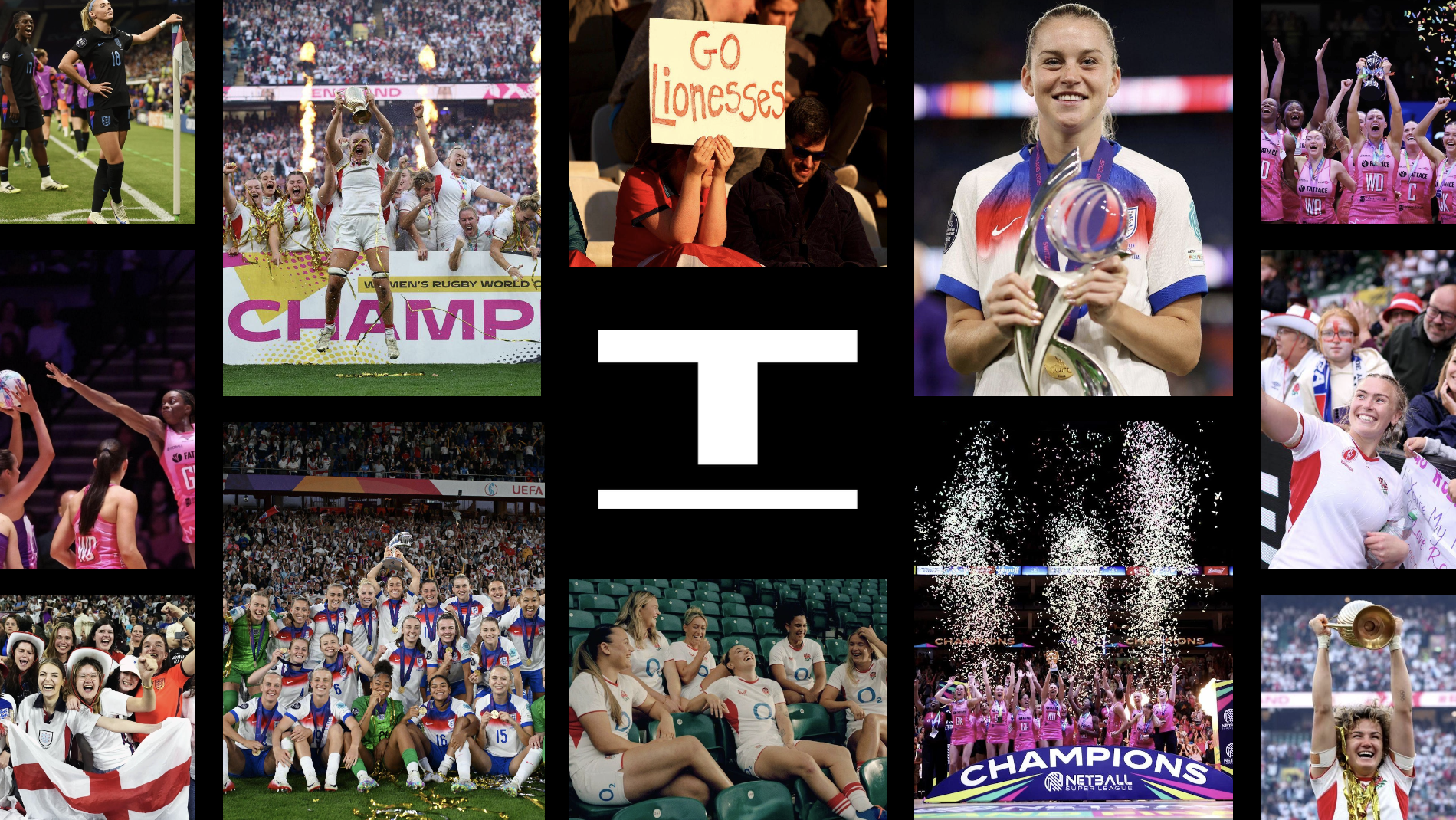
Today, on International Women’s Day 2026, the theme is ‘Give To Gain’. We asked our Social Media Director, Ella Jerman, what women’s sport has given her.
She reflects on belonging, leadership and the rise of challenger sports, alongside the work still needed across the industry to sustain that progress.
What has women’s sport given you?
Women’s sport has given me a lot, but most importantly it’s given me a sense of true belonging. Growing up, I constantly saw how women’s sport was viewed through a lens of outdated assumptions. As a young girl who just loved to play and watch football, I’d get weird looks for being part of the boys’ team, or when taking my seat at Upton Park. The growth of women’s sport in recent years has shattered these gender stereotypes, allowing women to get involved in areas that were previously off-limits. That’s everything from joining a local women’s football team — something which once felt impossible to find — to not getting weird looks anymore when you ask to watch the Lionesses in the pub. (I only have to go back to 2019 to remember how a bartender in central London stared at me like I was mental for wanting to watch them in the World Cup!) I spent years feeling like an outsider for wanting to be involved — worried about giving an opinion, scared to make my voice heard — but now it feels like the norm.
What does the industry still need to give more of?
We’ve seen countless athletes in women’s sport shoot to stardom in recent years, but the industry still needs to do more to support women who want to achieve success off the pitch. Across the industry, there continues to be a significant underrepresentation of women within leadership positions. Look at the Barclays Women’s Super League for example, where only four of the twelve head coaches are women. Thousands of women work across the sports industry, from coaches and volunteers to more behind-the-scenes roles in operations and strategy. The visibility of gender in leadership shapes who grows up believing they belong in positions of authority. We know that seeing successful female athletes encourages girls and young women to get involved in sport — so it’s time to make sure we’re making successful women visible off the pitch too.
What do we all gain when we invest in women’s sport?
We all gain a completely new perspective. For years, the men’s model has been seen as the default, that there is a go-to way to activate, invest in, or promote the product. But in women’s sport, the landscape looks completely different. Men’s sport, as we know it today, grew largely through a broadcast-centric model, legacy media, and generational loyalty. But in today’s world, we’re seeing women’s sport develop within an ever-evolving digital ecosystem, one where fans, platforms, and content interact continuously across multiple different devices, platforms, and time zones. This creates stark differences in how fans engage and what they value, and across women’s sport, we’re seeing unique fan bases emerge. This forces organisations and investors to rethink what they truly stand for and how they want to show up. Platforms like Instagram, TikTok, and YouTube have become primary storytelling spaces for female athletes themselves too. We saw this during the Women’s Rugby World Cup last year, where players like USA’s Ilona Maher and England’s Sarah Bern offered unique insight and perspective into their day-to-day lives on their own social channels. Social media has allowed players to control their own narratives by sharing their authentic selves and stories, giving us all a new perspective on what it’s like to be in their shoes.